
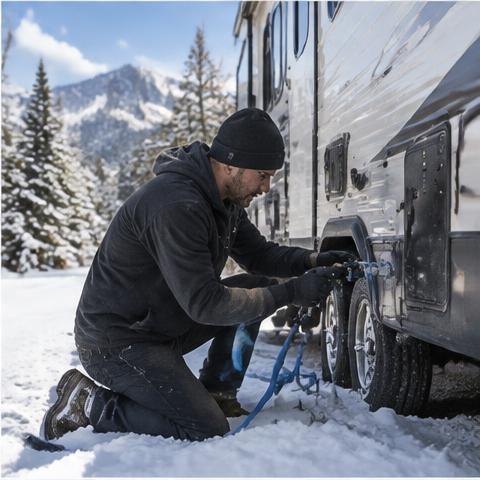
Before freezing nights in Durango, drain and protect your RV water system, including the heater, pump, supply lines, fixtures, and exterior connections. Follow your RV and appliance manuals because the correct sequence varies by model.
Begin with the water system
Disconnect the city water hookup and drain the fresh water and holding systems as directed by the manufacturer. Open fixtures to relieve pressure. Be sure to identify the water heater bypass before using RV-safe antifreeze, and never assume a tank is empty because the gauge says so.
Protect overlooked plumbing
Outdoor showers, toilet supply lines, low-point drains, filters, and water pump connections are easy to miss. A small amount of trapped water can expand in a hard freeze. Look for exposed fittings and confirm the procedure for each fixture.
Durango winter conditions
Cold nights can arrive before a longer stretch of winter weather. RVs parked near higher elevations or exposed campgrounds may freeze faster than expected. If you still use the rig between trips, plan a routine you can repeat safely.
When to call for help
If you are unsure where a bypass valve is, find a leak, or cannot get your water pump to prime afterward, mobile service can help at your RV.
Read the manuals before adding antifreeze
RV plumbing layouts vary. Some use a dedicated winterizing inlet; others require a hose at the pump, and some have appliance-specific instructions. Confirm which lines are being treated before you begin. Use only antifreeze labeled for RV potable-water plumbing, never automotive antifreeze. Follow the manufacturer’s instructions about the water heater, filters, and any inline treatment systems. The water heater may need to be isolated and drained rather than filled. If you do not know where the bypass valves are, guessing can waste product or leave a line full of water.
Drain deliberately
Open the low-point drains and fixtures as your RV manual directs. Water can remain in a line even after the tank appears empty, especially around bends and fixtures. Remember the kitchen and bathroom sinks, toilet, shower, and any exterior wash station. The pump and its strainer may also hold water. Work systematically and make a written checklist so nothing is forgotten when the weather changes quickly. Never run a water pump dry longer than the manufacturer allows. If you use compressed air as part of the procedure, observe your RV maker’s pressure limits.
Remember appliances and accessories
Ice makers, washing machines, dishwashers, and water filters may have separate winterizing steps. An RV equipped with one of these systems is not fully protected just because the faucets are treated. Check appliance manuals and determine whether a component needs draining, bypassing, or a separate cycle. Disconnect hoses and drain them before storing; a hose left attached to the city-water inlet can create a freeze point. Make sure the sewer equipment is emptied and stowed appropriately. The precise steps depend on what is installed on your RV.
Think about storage conditions
A Durango winter can include sunny afternoons and freezing nights. Do not assume daytime warmth is enough to protect an unheated RV. Consider whether the vehicle is exposed to wind, how long it will remain parked, and whether anyone will use the water system between trips. If the RV stays in service, maintaining heat and monitoring conditions requires a different plan from fully winterizing it. A power outage can also interrupt heat unexpectedly. Know which systems remain vulnerable if shore power is lost.
De-winterize carefully
When it is time to travel again, follow the manual to flush potable-water lines and restore the heater bypass to its operating position. Reinstall filters as appropriate and check fixtures, fittings, and pump operation while the system is pressurized. Watch for drips under sinks and near the water heater, toilet, and outside connections. A slow leak caught early is easier to address than hidden water damage. If the pump cycles when no fixture is open, or a line will not flow normally, stop and have the plumbing checked.
Keep a seasonal checklist
Record what you drained, bypassed, disconnected, and treated, as well as the date. Your checklist should include each sink, the shower, toilet, exterior shower, water heater, pump, filters, and any appliance with its own water connection. Put the checklist with the RV manual so it is available again in spring. If the RV is used during the winter, update your notes after each trip; a system that was protected in October may no longer be protected after you refill it. Check for leaks as soon as you pressurize the plumbing again. If you are not confident every connection is protected, a mobile technician can review the system where the RV is parked before another freeze.
Get help where you are.
When simple checks are not enough, Merrick can come to your RV in the Four Corners. Call (855) 760-0891 to describe what is happening and where you are parked.