
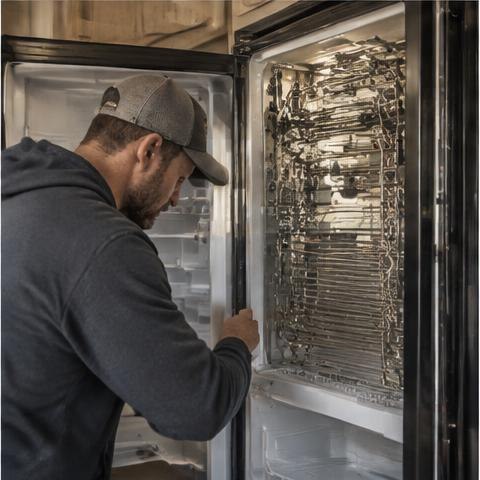
If an RV refrigerator stops cooling on propane, first check the propane supply, whether other gas appliances work, and the refrigerator’s selected mode. A blocked vent, ignition issue, or electrical fault may need professional diagnosis.
Check the basics
Verify that the propane tank valve is open and that the refrigerator is actually set to propane mode. Look for an error code and record it for the technician. Check that the RV is parked level within the appliance manufacturer’s guidance.
Give the refrigerator time
Absorption refrigerators do not cool instantly. The temperature inside may change slowly, especially after loading warm food or opening the door often. Do not repeatedly reset a unit without understanding the fault it reports.
Mountain travel considerations
Around Pagosa Springs and the San Juan region, changes in elevation and temperature may make existing appliance problems more noticeable. Ventilation and dependable power remain important. Never ignore a propane smell.
When to get help
If the unit fails to light, repeatedly faults, or cannot hold a safe temperature, have it examined. Merrick can diagnose RV refrigerator problems where you are parked.
Identify the refrigerator type
Different RV refrigerators operate differently. An absorption model may run on propane and electric power, while a compressor refrigerator depends on electricity and may not have a propane mode at all. Check the model information and owner’s manual before assuming how it should behave. Take a photo of any displayed code and note which mode the controls show. If it cools on shore power but not propane, that narrows the question, though it does not identify one guaranteed faulty part. Avoid removing panels or attempting a gas repair yourself.
Check the environment
An absorption refrigerator needs proper airflow around its exterior vents and should be operated within the manufacturer’s leveling guidance. Parked at a noticeably uneven site, it may struggle to cool or be damaged if run outside its limits. Inspect accessible exterior vents for obvious debris without reaching into hot or energized parts. Do not cover a vent to keep out dust or cold air. Warm groceries, frequent door openings, and direct sun on the RV can also affect the temperature you observe. Give the unit the time its manual recommends before judging performance.
Keep food safety in mind
Use a thermometer inside the refrigerator rather than judging by how cold the cabinet feels. If food is not staying at a safe temperature, move perishables to a working cooler or other refrigeration. Do not wait overnight for an uncertain repair while storing food that may spoil. A fridge that lights briefly but does not cool and one that will not ignite at all need different diagnostic steps. Keep track of the inside temperature, when the problem began, and whether electric operation changes the result.
Inspect only what is safe
Confirm there is propane in the tank, the valve is open, and other propane appliances behave normally. If there is a strong gas smell, stop using the appliance and seek help immediately. Do not loosen fittings, adjust burner parts, or use an open flame to test the supply. Some refrigerators have a reset procedure, but repeat resets can hide a persistent fault. Follow the owner’s manual once, record what happens, and stop if the code returns. A technician can test the gas, ignition, control, and ventilation systems.
Prepare for the service visit
Write down the refrigerator brand and model, whether it runs on electric power, how long it has been cooling poorly, and any fault code. Note your campsite location and whether you have shore power. These details help the technician plan an on-site visit. Mountain travel can make a marginal system more noticeable, but altitude alone is not a complete diagnosis. Merrick can inspect the appliance at your RV and explain the next step without requiring you to pack up camp first.
Think about cooling before departure
If you know the refrigerator struggles on propane, test it well before an off-grid trip rather than after you have packed perishable food. Pre-cool it according to the manufacturer’s instructions, measure its temperature, and observe whether it stays cold after switching modes. Do not confuse a quiet control panel with successful cooling. Pack a separate thermometer and a backup plan for food if the unit becomes unreliable. Record which mode works and which does not. Merrick can use those observations during on-site diagnosis. Since propane appliances have safety requirements, avoid experimental adjustments or bypasses to get through one more night in the mountains.
Get help where you are.
When simple checks are not enough, Merrick can come to your RV in the Four Corners. Call (855) 760-0891 to describe what is happening and where you are parked.