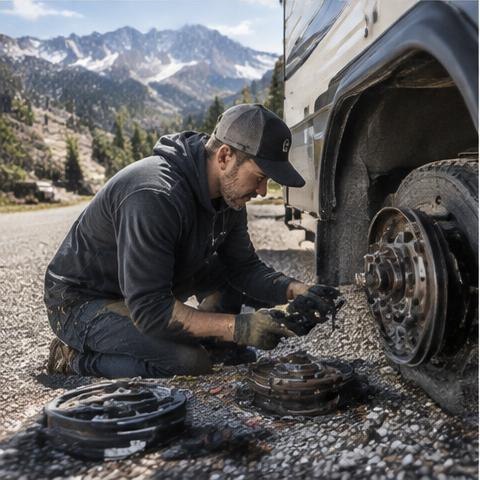
Before a mountain drive, check for brake response, tire and wheel condition, unusual bearing noise, and signs of overheating. If a wheel is loose, hot, or making noise, do not continue driving until it has been inspected.
Look over the trailer before leaving
Check tire pressure and visible condition, wheel hardware, brake wiring, and any sign of leaking grease. Compare one wheel with the others; a new sound or smell deserves attention. Follow the inspection and service schedule specified for your axles and brakes.
Test braking before the grade
Confirm the trailer brakes respond and the brake controller is set appropriately before entering a long descent. A short check in a safe location can reveal a problem without waiting for a steep pass. Never rely on a quick visual inspection alone if braking feels different.
Why mountain routes are demanding
US-550 and Wolf Creek Pass involve grades and changing conditions. Descents put sustained demand on braking systems. A compromised bearing or brake can become dangerous far from convenient service, so address concerns before the next climb or descent.
When to stop and call
A loose wheel, grinding noise, or significant heat is not a wait-and-see issue. Park somewhere safe and ask for an on-site inspection.
Schedule inspection before travel
A pre-trip check is easier in a campground or driveway than on the shoulder of a mountain road. Use your trailer and axle manufacturer’s maintenance interval for bearing lubrication, brake adjustment, and inspection. Record when these tasks were last done rather than relying on memory. If a trailer has been parked for a long season, inspect it even if the mileage is low. Corrosion, moisture, and age can affect components that have not been used. A qualified technician can look for play, wear, damaged wiring, and signs that a seal is leaking.
Compare the wheels
Walk around the trailer and compare the wheels. Look for grease on a wheel face, unusual tire wear, missing hardware, or one wheel that sits differently. After a short drive and a safe stop, an unusually hot wheel compared with the others can indicate a problem, but never touch a hot hub directly. A burning smell or fresh scraping noise is reason to stop. No single visual clue confirms that bearings and brakes are safe; the goal is to spot warning signs before committing to a long grade.
Test the brake system thoughtfully
Check the controller, breakaway equipment, and visible connections according to the manuals for your tow vehicle and trailer. In a safe place at low speed, confirm that trailer braking feels predictable. If the trailer pulls, surges, or seems to provide little braking, investigate before climbing into remote terrain. Do not attempt an unsafe roadside test. Brake performance depends on the whole system, not just the pads or magnets. Wiring, adjustment, tire condition, and the controller all matter.
Drive mountain grades conservatively
Even correctly maintained equipment has limits. Plan your route, check weather and road conditions, and use your tow vehicle and trailer manufacturers’ guidance for grades and towing. Leave more stopping distance and avoid riding the brakes continuously on a descent. Pull over only where it is safe and permitted if you need to inspect a concern. US-550 and Wolf Creek Pass reward preparation, not haste. If handling or braking changes, do not try to make it to the next town by hoping the symptom disappears.
Know when not to continue
A wheel bearing that is failing can cause severe damage or loss of control. Significant heat, visible wheel movement, grinding, or smoke calls for a safe stop and professional attention. A trailer brake fault also deserves prompt inspection, particularly before a sustained downhill stretch. Merrick provides mobile help in the Four Corners, so you can discuss the symptoms and location before attempting to move the trailer. Keep the trailer secure and away from traffic while arranging help.
Prepare for a safe inspection stop
Before leaving, identify safe pullouts along your route and avoid assuming a narrow mountain shoulder will be suitable for a repair. Carry the information for your trailer axle and brake system so a technician can identify the correct components. Note when a symptom occurs: only while braking, only during turns, or continuously while moving. If an issue begins after a recent service, include that detail too. Keep occupants away from traffic and do not crawl beneath an unsecured trailer. A safe inspection requires the right tools and stable support. The goal is to resolve uncertainty before committing to a pass, not to diagnose complex running-gear problems beside moving traffic.
Get help where you are.
When simple checks are not enough, Merrick can come to your RV in the Four Corners. Call (855) 760-0891 to describe what is happening and where you are parked.