
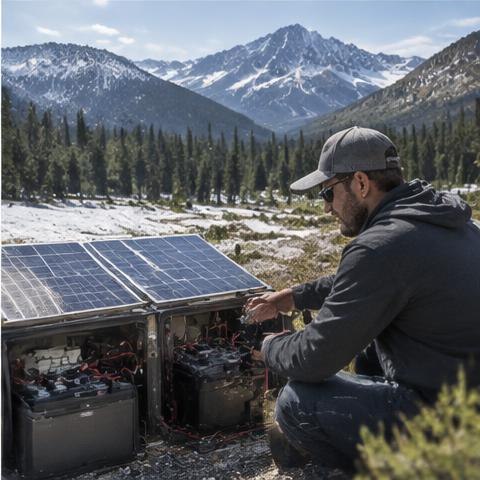
Repeatedly dead RV batteries usually point to a gap between power use and charging, an aging battery, or an electrical fault. Start by checking battery charge, charging sources, and which appliances are drawing power.
Understand your daily power use
Lights, fans, refrigerator controls, furnace blower, and device charging all use electricity. A furnace can consume significant battery energy overnight even when heat comes from propane. Keep track of what runs and how long.
Check charging sources
Solar output changes with shade, weather, and the season. A generator, converter, or alternator connection may not charge as expected if a fuse, cable, or component is faulty. Check the readings available from your battery monitor if you have one.
Conditions in the San Juans
Mountain campsites can be shaded by pines and cold nights can increase furnace use. Higher elevations may also mean a longer drive to help. Plan a power reserve rather than running batteries to empty.
When to call a pro
If the battery drains unexpectedly, connections heat up, or charging readings do not make sense, have the system checked. Merrick can troubleshoot RV electrical issues where you are camping.
Make a simple energy inventory
Write down everything that uses 12-volt power in a typical day, including lights, water pump, fans, control boards, device chargers, and the furnace blower. Many propane appliances still need battery power to control or ignite them. Estimate which items run overnight, when solar is unavailable. A small persistent load can add up across several cloudy or shaded days. If you have a battery monitor, compare daily use with charging input rather than relying on a single voltage reading. This helps separate unusually heavy consumption from inadequate charging.
Understand usable capacity
The number printed on a battery does not always represent how much energy you can safely use under your particular setup. Battery chemistry, age, temperature, and manufacturer guidance all matter. A lead-acid bank may behave differently from lithium in cold mountain conditions. Follow the battery maker’s charging and temperature requirements, and do not assume one battery’s settings work for another. Repeated deep discharge can shorten battery life. If the bank seems to lose capacity suddenly, testing the batteries under load can be more informative than checking a resting voltage alone.
Consider shade and weather
Solar panels produce less energy when shaded, dirty, or covered, and conditions can change quickly in the San Juans. A campsite that is bright at noon may have a long morning or afternoon shadow from trees or mountains. Compare actual charging readings with your expectations across the day. Check for obvious damage to panel connections without touching exposed electrical parts. If a portable panel is used, keep cables routed safely. A sunny forecast is not a guarantee that the batteries receive enough charge to replace what the RV used overnight.
Check each charging path
If batteries die even after driving or spending time on shore power, ask whether the converter, alternator connection, or solar controller is actually charging the bank. A damaged cable, fuse, connection, or charger may leave one charging source ineffective while others work. Record battery monitor readings before and after a charging session. Do not disconnect live wiring or modify fuse sizes to make a system work. A technician can inspect the charging path, verify connections, and measure performance rather than replacing a battery on a guess.
Build a reliable backup plan
When camping away from hookups, keep a reserve for the essentials, particularly heat on a cold night. Know when you will need to reduce loads, charge by an approved source, or move to a serviced campsite. Follow campground rules and generator operating guidance if you use one. If wiring becomes hot, smells unusual, or shows signs of damage, shut down the affected system and get help. Merrick can troubleshoot batteries and RV electrical systems where you are parked, including the charging equipment that supports them.
Use readings instead of assumptions
A voltage display, a percentage estimate, and the current flowing into a battery do not measure exactly the same thing. Learn what your monitor shows and when the reading is reliable. Compare readings after charging, before bed, and in the morning over several days. Note whether the furnace ran, whether the campsite was shaded, and how long your charging source operated. If your batteries appear full immediately after charging but fall quickly under a modest load, share that pattern with a technician. Replacing the battery before checking the charger and wiring may not solve the problem. An on-site diagnosis can test both storage and charging rather than guessing from one morning’s reading.
Get help where you are.
When simple checks are not enough, Merrick can come to your RV in the Four Corners. Call (855) 760-0891 to describe what is happening and where you are parked.